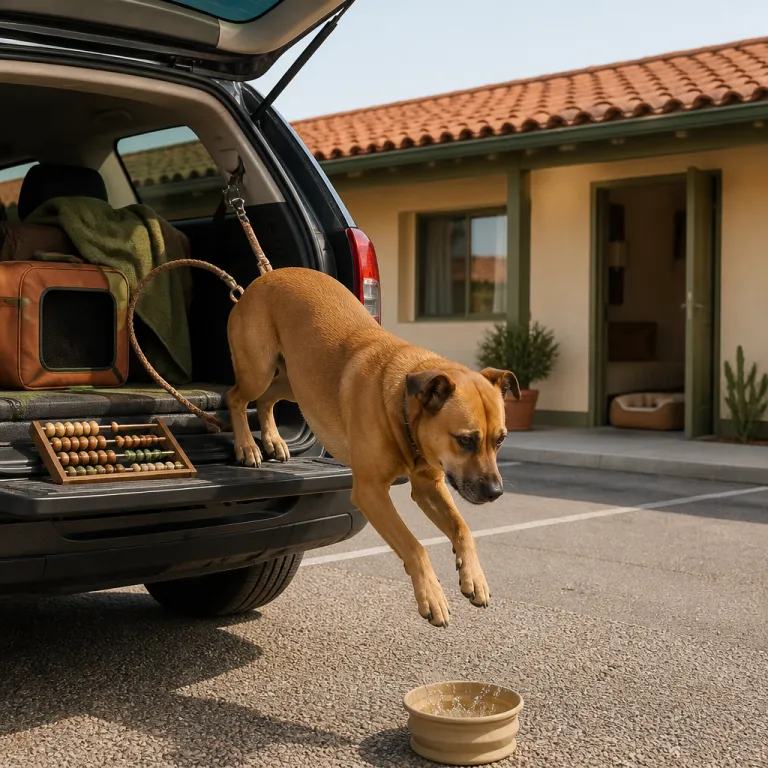
The real math of a road trip with your dog budget
When you run the numbers calmly, a dog-friendly driving budget often beats flying before you even factor in stress. For a family of four traveling with one dog on a typical domestic itinerary, airline tickets plus pet fees usually eclipse the total fuel, lodging and food costs of driving the same route. Driving frequently wins on cost, especially for short and medium distances with multiple travelers.
Start with flights, because that is where pet travel costs spike fast with a dog in the cabin. The average in-cabin pet fee per flight segment on major U.S. airlines typically sits around 95 to 125 dollars, and a domestic round-trip airfare per person often hovers near 350 dollars, so a family of four with one pup can easily cross 1,700 to 1,800 dollars before paying for airport parking or a single snack.1,2,9 In-cabin fees usually fall in the 100–200 dollar range per flight; cargo fees vary widely by carrier, route and animal size.
Now compare that to a long road trip across the United States with a well maintained car and a realistic fuel budget. Using an average fuel cost of about 0.25 dollars per mile, a 1,600 mile route each way (roughly 2,575 kilometres) comes to about 800 dollars in fuel for the round trip, leaving room in your budget for a pet friendly motel, human meals and quality dog food.3 For shorter drives or when you can share costs across several people, the per person expense of driving drops even further.
Boarding changes the equation again, because leaving a dog at home is rarely the bargain it appears. Industry surveys and veterinary sources suggest the average extra cost of traveling with a pet ranges from about 100 to 300 dollars per trip, while boarding that same pet can run between 350 and 700 dollars per week depending on region and services, so taking your dog in the car usually protects both your wallet and your pup’s routine.4,5,10 When you plan a pet-inclusive road budget with clear numbers in front of you, the long road becomes not only emotionally appealing but financially rational.
There is also the hidden value of control when you travel with dogs by road instead of air. You decide when to stop, how cool to keep the cabin, and how often your crate trained companion stretches their legs, which will help keep pet stress low and your own patience intact. That level of control is impossible in a plane cabin, where even a confident dog may still struggle with noise, pressure changes and limited access to water or a favorite toy.
For premium families used to flying, the shift to road trips with dogs can feel like a downgrade at first. In practice, a carefully planned canine travel budget often upgrades the entire experience, because the dog car becomes a rolling base camp rather than a cramped crate under a seat. Surveys of pet owners in the United States indicate that roughly 80–90 percent of people who travel with animals already use car travel as their primary mode, which shows how strongly the market has tilted toward the road for discerning pet owners.6,11
Why the car beats the cabin for your dog’s comfort
Numbers matter, but a road trip cost plan only tells half the story without comfort in the equation. A dog experiences a flight as a series of abrupt transitions, from check in queues to security lines to the long wait at the gate, and each stage adds noise, crowds and unfamiliar handling. In contrast, a well planned road journey with your dog in the car offers gradual changes, predictable routines and the reassuring presence of the family they know.
Think about the sensory landscape from your pup’s perspective on a long road journey. In the dog car you can keep pet comfort front and centre by setting the temperature, choosing quiet routes and stopping whenever the dog needs a break, while a plane locks you into a schedule that rarely aligns with canine needs. You can also position a crate or harness so your dog’s favorite blanket and toy are within reach, which will help a nervous pet settle faster.
Health and safety considerations tilt the balance further toward road trips with dogs. Many airlines require a recent health certificate and proof of a rabies vaccine, yet they still place pets in cargo holds or under seats where you cannot intervene quickly if something goes wrong, while a car allows you to monitor breathing, posture and behaviour in real time. If you ever need an emergency vet along a long road route, you can simply exit the highway and search locally instead of waiting for a plane to land.
Families who travel with dogs also appreciate the flexibility of timing on the road. You can plan your trip to avoid the hottest hours of the day, schedule early morning or late evening driving blocks, and build in regular stops for water and food, which keeps both humans and dogs in better shape. That level of micro planning is impossible when you are locked into fixed departure and arrival times that may not suit a senior dog or a young pup.
International pet travel highlights the contrast even more sharply. Flying with a dog to South America or another continent often involves complex paperwork, strict health certificate timelines and quarantine rules, while a cross border road trip within the United States or into neighbouring countries can be managed with a clear checklist and a flexible route. For readers considering more complex journeys, guides on traveling with pets in South America and other regions show how quickly regulations escalate once you leave the car behind.
Comfort is not just about the dog, of course. Parents juggling children, luggage and a pet in an airport often find their own stress levels spike, while the same family in a well organised car can turn the trip into a rolling holiday with games, playlists and scenic detours. When your dog travel budget supports a slower pace, the journey becomes part of the vacation rather than a hurdle to endure.
Airline pet fees versus fuel, food and fair value
Airline pricing has quietly pushed many families toward a more analytical pet travel mindset. In-cabin pet fees that once felt manageable now sit in the 95 to 125 dollar range per segment on many U.S. routes, which means a simple round trip with a dog can add 190 to 250 dollars before you even consider cargo options.1,2 When you multiply that by multiple dogs or complex itineraries, the financial logic of staying on the road becomes hard to ignore.
There is also the opportunity cost of those fees, because every dollar spent on a pet ticket is a dollar not spent on a better room, a memorable meal or an extra night somewhere dog friendly. A family that chooses to drive instead of fly can redirect airline pet fees into a higher quality yet still budget conscious pet friendly motel, a well reviewed roadside restaurant or a new crate that keeps the dog safer in the car. For many readers, that reallocation of funds is where a car-based itinerary really starts to feel like an upgrade rather than a compromise.
Boarding costs create another layer of comparison that often surprises first time planners. When the average extra cost of traveling with a pet sits between 100 and 300 dollars per trip, but boarding the same animal can cost 350 to 700 dollars per week, the financial case for taking your dog along on road trips becomes compelling, especially for longer holidays.4,5 Is it cheaper to drive or fly with a dog? For most families, driving usually comes out ahead, particularly for domestic routes and multi person parties.
Airline policies also change frequently, which complicates long term planning for families who travel with dogs regularly. One carrier may reduce its transpacific pet cabin fee, as seen in recent changes on a major Hawaiian route, while another tightens weight limits or bans certain breeds from the cabin entirely, and keeping track of these shifts requires constant research. For travellers who prefer stability, a car based strategy anchored by a clear pet travel budget offers more predictable costs and fewer unpleasant surprises.
When you compare that volatility to the relative stability of fuel prices and motel rates, the road looks even more attractive. Fuel costs can be estimated with reasonable accuracy using distance calculators, and pet friendly motel chains publish their pet policies clearly, which allows you to plan a long road route with confidence months in advance. That transparency is a quiet but powerful advantage for families who like to plan every detail of their trip.
To see how this plays out, consider a family of four driving from Chicago to Denver, roughly 1,000 miles each way. At 0.25 dollars per mile, fuel for the 2,000 mile round trip costs about 500 dollars, and four nights in midscale, pet friendly motels at 120 dollars per night add 480 dollars, while meals and dog supplies might add another 300 dollars, for a total of around 1,280 dollars. The same family flying could spend about 1,400 dollars on tickets at 350 dollars per person plus roughly 200 dollars in pet fees, reaching 1,600 dollars before airport parking or local transport, so the road trip delivers both savings and more control over the experience.3,9
Rest stop infrastructure that finally respects the dog
The modern road trip with dog budget is not built around gas pumps alone anymore. Across the United States, a new layer of pet friendly infrastructure has emerged quietly at highway exits, and it changes how far you can comfortably drive with dogs in the car. Love’s Travel Stops, for example, report hundreds of fenced dog parks across dozens of states, turning what used to be a rushed toilet break into a proper exercise session.7
These fenced areas matter because they let you keep pet safety high while giving your pup real off leash time to run, sniff and reset. Instead of pacing on a short lead beside the car, your dog can stretch properly, chase a ball and interact with other dogs in a controlled space, which will help reduce restlessness during the next long road segment. For families, that means fewer back seat complaints and a calmer atmosphere as the kilometres roll by.
Planning your route around these stops is now part of smart pet travel strategy. Many mapping apps and travel with pets platforms highlight dog friendly rest areas, fenced runs and even on site emergency vet clinics, so you can plan a road trip with dog budget that includes a proper break every two to three hours, which most veterinarians recommend.8 A simple rule of thumb is to stop for at least fifteen minutes every 150 to 200 kilometres, giving both humans and dogs time to hydrate, use the bathroom and reset their posture.
These pauses are also the perfect moment to check your dog car setup. Make sure the crate or harness is still secure, the seat belt attachment has not twisted, and the dog’s favorite toy or chew is within reach, because small adjustments here will help prevent bigger problems later on the long road. Use the time to offer fresh water, a light snack if appropriate, and a quick check of paws and coat for burrs or hot spots.
Responsible use of these facilities keeps them pleasant for everyone. Always pick up after your dog, keep pet interactions polite and controlled, and avoid overcrowding a small fenced area with too many dogs at once, especially if some are not crate trained or used to sharing space. For readers interested in broader etiquette, our guide on leave no trace principles for dogs in natural areas offers a useful framework that applies just as well to highway rest stops.
As this infrastructure expands, the character of road trips with dogs is changing. What used to be a compromise born of necessity is becoming a genuinely pleasant way to travel with pets, where the journey includes curated stops that both you and your dog can look forward to. When you design your road trip with dog budget around these pet friendly oases, the highway starts to feel less like a corridor and more like a string of small, well timed adventures.
No-fee motels and how to work the pet policy grid
Lodging is where a road trip with dog budget can either unravel or shine. The good news for premium families is that a quiet revolution has taken place across the midscale motel landscape, with several major chains now welcoming pets at little or no extra cost. For travellers who plan carefully, this network of dog friendly properties turns a long road journey into a series of predictable, affordable overnight stays.
Chains such as Red Roof Inn, Motel 6 and La Quinta have become staples for pet travel precisely because their policies are clear and generous. One brand typically allows a single pet up to a substantial weight limit to stay free at hundreds of locations, another welcomes up to two dogs or cats with a combined weight cap, and a third offers no extra pet charge at more than 800 properties, which will help keep your overall budget under control. When you map your route across the United States, you can often string together these pet friendly stops like beads on a necklace.
The key is to read the fine print before you book, because each property may interpret chain wide guidelines slightly differently. Some locations limit the number of dogs per room, others require that pets not be left unattended, and a few maintain breed or size restrictions, so a quick call to the front desk will help you avoid surprises on a long road trip with dog budget. Always ask whether a health certificate or proof of a recent rabies vaccine is required at check in, especially if you are crossing state lines or staying near sensitive wildlife areas.
Room setup matters almost as much as policy. When you arrive, position your dog crate in a quiet corner away from the main door, clip a seat belt harness to a fixed point if you prefer not to use a crate, and lay out the dog’s favorite bed or blanket to create a familiar scent zone, which will help your pup settle quickly after hours in the car. Keep pet food and water bowls on a washable mat near the bathroom, and store treats and toys in a dedicated pack so you can find them easily during a late night arrival.
Noise management is another subtle but important part of being a good guest in dog friendly motels. Choose ground floor rooms away from elevators when possible, close curtains to reduce visual triggers, and use a white noise app to mask hallway sounds that might set your dog barking, because a relaxed dog is a quiet dog in shared spaces. These small steps protect your own sleep and help ensure that the property remains genuinely pet friendly for future travellers.
When you align a chain strategy with your road trip with dog budget, the savings compound over multiple nights. Skipping a 25 to 75 dollar nightly pet fee across a week long trip can free up hundreds of dollars for experiences, from a guided hike to a special meal, while your dog enjoys a consistent routine of evening walks and familiar bedding. In the end, the right motel grid turns the practical act of finding a bed into a quiet expression of hospitality that includes every member of the family, paws included.
Packing, safety and timing: how to engineer a smooth dog road trip
A road trip with dog budget only works if the car itself functions as a safe, efficient habitat. Packing for pet travel is less about volume and more about systems, because a well organised boot or back seat can turn potential chaos into calm. Think in zones: one for safety, one for food and water, one for comfort and one for paperwork.
Start with safety, because that is non negotiable on any long road journey. Every dog should travel with either a crash tested crate or a properly fitted seat belt harness attached to a fixed point in the car, which will help protect both the animal and human passengers in sudden stops or collisions. A crate trained dog often settles faster, but even a harnessed pup benefits from clear boundaries that prevent them from roaming the cabin.
Next comes the travel with food and hydration kit. Pack enough of your dog’s favorite food for the entire trip plus two extra days, portioned into labelled containers so you can maintain consistent feeding times even when your schedule shifts, and store a dedicated water supply with a collapsible bowl within easy reach, because changing diets abruptly on the road can upset a sensitive stomach. Include a small selection of familiar treats to reward calm behaviour during challenging moments, such as heavy traffic or long road detours.
An aid kit tailored to dogs belongs alongside your human first aid supplies. At minimum, include bandages, antiseptic wipes, tweezers, a digital thermometer, any prescribed medications and a printed list of emergency vet contacts along your route, which you can compile before departure using online directories and local recommendations. Keep copies of your dog’s health certificate, rabies vaccine record and microchip number in both digital and paper form, stored in a waterproof pouch that lives in the glove compartment.
Timing your driving blocks is the final piece of the engineering puzzle. Most veterinarians suggest stopping every two to three hours on a long road trip to let dogs stretch, relieve themselves and reset, and aligning these breaks with your own fuel or snack stops will help maintain a steady rhythm that keeps everyone comfortable.8 In hot weather, plan your route to prioritise early morning and late evening driving, leaving the hottest midday hours for shaded rest stops or air conditioned indoor breaks.
When all these elements come together, the car ceases to be just a vehicle and becomes a moving extension of home. A thoughtful road trip with dog budget, anchored by safety gear, smart packing and realistic timing, transforms potential friction points into smooth routines that your dog quickly recognises and trusts. That trust is the quiet currency that makes every kilometre feel lighter for both of you.
Designing the perfect route for a dog-first road journey
The final layer of a road trip with dog budget is the route itself. A straight line on a map rarely makes sense when you factor in canine needs, seasonal weather and the distribution of pet friendly services across the United States. The most successful itineraries are dog first by design, not dog tolerant afterthoughts.
Begin by plotting your must reach points, then work backward to shape daily driving distances that respect both your stamina and your dog’s limits. For most families, 400 to 600 kilometres per day strikes a balance between progress and comfort, allowing for three or four substantial stops where your pup can move freely and reset, which will help prevent the low level agitation that builds during an overly ambitious long road push. Use mapping tools that allow you to layer in rest areas, dog parks and pet friendly motels rather than relying solely on generic navigation apps.
Climate and terrain should guide your choices as much as distance. In summer, favour higher elevation routes and early departures to avoid baking your dog in a car park during midday breaks, while in winter you may prefer lower passes and towns with reliable road maintenance, because a stranded car is no place for a dog, no matter how well you pack. Always have a contingency plan that includes alternative towns with pet friendly lodging in case weather or traffic disrupts your schedule.
Urban versus rural balance is another subtle consideration. Large cities offer more emergency vet options, specialised pet stores and dog friendly cafés, but they also bring heavier traffic, limited parking and more sensory overload for a tired pup, so weaving in smaller towns with quieter parks can help keep pet stress levels manageable. When you plan a road trip with dog budget, think of these smaller stops as pressure valves that release accumulated tension from both humans and dogs.
Finally, build in at least one destination day where you do not move the car at all. Choose a town or park with trails, water access or open spaces where your dog can enjoy a full day of unstructured exploration, while you enjoy the luxury of not packing up the room or checking the route, because this pause will help everyone reset before the next driving block. That day often becomes the emotional highlight of the trip, a reminder that the purpose of all this planning is not just to reach a place but to share a journey with a creature who experiences the world through scent, sound and simple presence.
When you look back at the full picture, the case for the road is clear. A carefully designed road trip with dog budget, supported by modern rest stop infrastructure, no fee motels and thoughtful route planning, delivers better value, more comfort and richer memories than most flights can offer. The math proves it, but your dog’s relaxed posture in the back seat will confirm it long before you reach the final exit.
Key figures that shape the modern dog road trip economy
- Average in-cabin pet fees of around 95 to 125 dollars per flight segment on major U.S. airlines mean that a simple round trip with a dog can add roughly 200 to 250 dollars in airline charges alone, which often approaches or exceeds the total fuel cost of a comparable road journey of roughly 3,000 kilometres.1,2,3
- Typical domestic round-trip airfare of about 350 dollars per person means that a family of four can spend around 1,400 dollars on tickets before adding any pet fees, while the same family could often complete a multi day road trip with dog budget for less when fuel, motels and meals are combined.9
- Average fuel costs of approximately 0.25 dollars per mile allow travellers to estimate road trip expenses with reasonable accuracy, so a 2,000 mile itinerary will usually require around 500 dollars in fuel, leaving room in the budget for pet friendly lodging and activities.3
- Surveys of pet travel behaviour indicate that roughly 80–90 percent of pet travellers already use car travel as their primary mode, reflecting both the rising cost of airline pet fees and the growing availability of dog friendly infrastructure along major routes.6,11
- Analyses of pet related travel expenses suggest that taking a dog along typically adds 100 to 300 dollars per trip in incremental costs, while boarding the same animal at home can cost between 350 and 700 dollars per week, making road trips with dogs financially attractive for many families.4,5,10
- Large motel chains that allow one or more pets to stay free at hundreds of locations across dozens of states effectively create a nationwide grid of budget friendly, dog friendly lodging that can reduce or eliminate nightly pet fees for well planned itineraries.
FAQ: practical questions about choosing the road over the runway
Is it cheaper to drive or fly with a dog?
For most families, driving is usually cheaper than flying with a dog, especially on domestic routes within the United States. When you combine airfare for each person with in-cabin pet fees that often reach 95 to 125 dollars per segment, total flight costs quickly exceed the fuel, motel and food expenses of a well planned road trip with dog budget.1,2,3 Driving tends to be most economical for short to medium distances and for groups of two or more travelers.
What are common airline pet fees and how do they compare to driving costs?
Many major airlines charge between about 95 and 125 dollars per flight segment for a small dog in the cabin on domestic routes, and cargo fees can be higher and more variable, while some carriers also limit the number of pets per flight.1,2 In contrast, driving costs are driven mainly by fuel, which can be estimated at roughly 0.25 dollars per mile, plus any pet fees at motels, many of which are now waived entirely at certain chains.3 When you spread those costs across a family and a multi day itinerary, the road trip with dog budget usually comes out ahead.
Are there pet friendly motels without extra fees?
Yes, several large motel chains in the United States welcome dogs without charging additional nightly pet fees, though individual properties may still apply weight limits, room caps or behavioural rules. These no fee policies can save families 25 to 75 dollars per night compared with properties that charge per pet, which adds up quickly on a long road journey. Are there pet-friendly motels without extra fees? Yes, many motels offer no-fee stays for pets; research ahead.
How often should I stop with a dog on a long road trip?
Most veterinarians recommend stopping every two to three hours on a long road trip with dogs to allow for bathroom breaks, water, light exercise and a mental reset.8 For many families, this translates to a pause every 150 to 200 kilometres, which aligns naturally with fuel or snack stops and helps keep pet stiffness and restlessness to a minimum. Planning these breaks in advance around fenced dog areas or parks will help your dog arrive calmer and more comfortable.
What documents and safety gear does my dog need for car travel?
At a minimum, your dog should travel with a secure crate or seat belt harness, an identification tag, and access to fresh water, while longer trips also call for a pet specific first aid kit and a list of emergency vet contacts along your route. Many destinations and some accommodations require proof of a current rabies vaccine and, in certain cases, a recent health certificate from your veterinarian, so keeping digital and paper copies of these documents in the car is wise. Preparing this paperwork in advance ensures that your road trip with dog budget is not derailed by avoidable administrative surprises.
Sources
- Representative U.S. airline pet policies for in-cabin travel (fee ranges and segment-based charges), such as American Airlines, Delta Air Lines and United Airlines customer guidelines.
- U.S. Department of Transportation consumer information on airline passengers with service animals and pets (policy overviews and fee structures).
- Average U.S. gasoline prices and fuel cost calculators from national automotive and travel organizations, including AAA Gas Prices and U.S. Energy Information Administration summaries.
- Industry surveys of pet travel spending by major pet product and insurance companies, including the American Pet Products Association (APPA) National Pet Owners Survey.
- Typical boarding and kennel rate ranges reported by veterinary associations and pet care networks, such as the American Veterinary Medical Association (AVMA) and Rover.com cost summaries.
- Pet travel trend reports from national pet industry trade groups and travel research firms, including APPA market outlooks and TripAdvisor pet travel insights.
- Love’s Travel Stops public information on the number and distribution of on-site dog parks across the United States.
- Veterinary guidance on safe travel intervals and rest break frequency for dogs on long car journeys from sources such as the American Animal Hospital Association (AAHA).
- Domestic airfare averages compiled in U.S. Bureau of Transportation Statistics reports on air fare consumer price trends.
- Pet boarding cost analyses published by national pet care platforms and insurance providers, including annual cost-of-care reports.
- Car-versus-air pet travel mode share estimates drawn from APPA pet travel behaviour data and travel industry surveys of U.S. households.