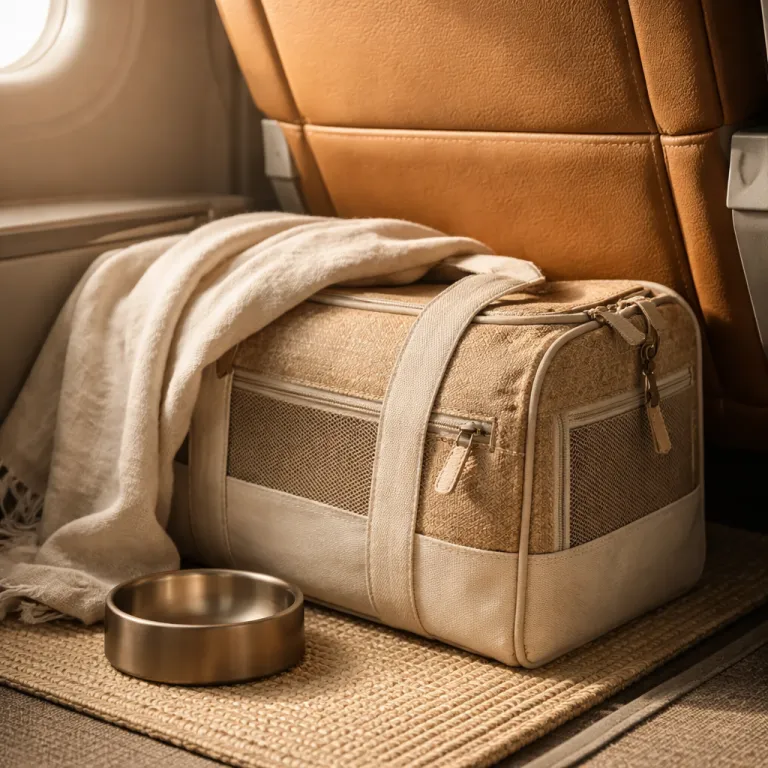
Hawaiian Airlines pet fee changes: what couples with pets really save
Hawaiian Airlines has quietly reshaped its pet travel pricing, and travelers flying with animals between the mainland and Hawaii now see the first tangible benefit of the pending Alaska Airlines merger. Effective for flights departing on or after January 2, 2026, the in-cabin pet fee on mainland routes drops from 125 to 100 dollars each way, while the checked pet fee on the same routes falls from 225 to 200 dollars, bringing Hawaiian’s charges in line with Alaska’s existing 100 dollar in-cabin and 200 dollar checked pet fees on comparable transpacific services and signalling a shared approach to pet travel. For a single cabin pet on a round trip, that 25 dollar cut per leg means a 50 dollar saving per animal, which becomes meaningful when you are budgeting for a getaway with two small dogs or when both partners are each flying with one cat.
The official Hawaiian Airlines pet fee 2026 structure now separates domestic mainland and interisland travel more clearly, with the interisland in-cabin fee holding steady at 35 dollars per segment. That means passengers hopping from Honolulu to Maui or between islands with dogs or cats in a soft-sided carrier inside the cabin do not see any change in pet fees, even as longer transpacific flights become slightly kinder to the wallet. Hawaiian Airlines has framed the update as a streamlined pet policy designed to maintain service quality and safety for pets allowed in the cabin and for animals checked as baggage, rather than as a short-term promotional discount tied only to merger headlines.
Who actually benefits most from the new Hawaiian Airlines pet fee 2026 grid? West Coast to Hawaii snowbirds travelling with pets for extended winter stays, households relocating with one or two dogs, and frequent visitors who previously paid the higher fee every few months will feel the difference most clearly. A pair flying from Los Angeles to Honolulu with two cats in the cabin side by side now saves 100 dollars on a round trip compared with the old fees, while a traveller checking a single dog as baggage in the aircraft hold saves 50 dollars over the same itinerary, which can be reallocated to a pet-friendly rental car or a night in a genuinely animal-welcoming hotel.
Quick savings snapshot (mainland routes, per pet)
- Old in-cabin fee: 125 dollars each way → New in-cabin fee: 100 dollars each way (25 dollar saving per leg; 50 dollars round trip).
- Old checked pet fee: 225 dollars each way → New checked pet fee: 200 dollars each way (25 dollar saving per leg; 50 dollars round trip).
- Two cabin pets on a round trip: 100 dollars total saving compared with the previous pricing.
Cabin versus cargo: how Hawaiian’s pet policy compares on value
For travelers weighing whether to keep a pet in the cabin or use the checked baggage option, the revised Hawaiian Airlines pet fee 2026 numbers sharpen the calculation. A cabin pet on a mainland flight now costs 100 dollars each way, while a checked pet in the same direction costs 200 dollars, so the airline is clearly nudging owners of small dogs and cats toward an allowed in-cabin booking whenever the animal and carrier meet size requirements. The carrier still limits pets allowed in the cabin to small animals that fit comfortably in a soft-sided, well-ventilated container under the seat, and that carrier must remain closed for the duration of travel, which can be challenging on longer, almost international-length flight times even when the route is technically domestic.
Value is always relative, and travelers who track every fee will remember that Frontier’s cabin pet fee sits at 99 dollars each way on many routes, a benchmark we analysed in our detailed review of flying with a dog for 99 dollars each way. Against that backdrop, Hawaiian’s 100 dollar cabin charge is competitive but not aggressively cheap, especially when you factor in that some airlines treat emotional support animals differently or have more flexible rules for service animals. Hawaiian Airlines, like most major U.S. carriers, now distinguishes clearly between a trained service animal, which travels under separate rules and is not charged a standard pet fee, and emotional support animals, which are treated as regular pets and must comply with the same pet policy, cabin and cargo limitations, and carrier dimensions as any other dogs or cats.
For checked pets, the 200 dollar fee each way remains a significant line item, and passengers should think carefully before choosing cargo or checked baggage for dogs or cats that might qualify for the cabin. Larger animals that cannot fit in a soft-sided or hard-sided carrier under the seat will still need to travel as checked baggage when the airline and route allow it, and Hawaiian’s requirements for kennel construction, ventilation, and weight are strict, particularly on longer flights to Hawaii where heat and handling risks are higher. When comparing airline pet options for international travel that connects onward from Honolulu, remember that some partner carriers may not accept cats or dogs as checked baggage at all, forcing a rebooked itinerary or an overnight stay that adds more hidden fees than the initial pet fee saving.
Practical rules, merger signals, and what couples should watch next
Beyond the headline numbers, the Hawaiian Airlines pet fee 2026 update comes with a reminder to read the fine print on requirements before you book a romantic escape with animals in tow. Hawaiian Airlines specifies that only a limited number of pets are allowed in the cabin per flight, that each passenger may bring only one cabin pet in most cases, and that the combined weight of the pet and carrier must fall within strict limits, which matters when two adults are each hoping to bring a cat or small dog. The airline also enforces health documentation rules that differ between domestic mainland routes and flights into Hawaii, where quarantine regulations and agricultural protections mean that pet travel demands more paperwork and advance planning than a typical continental trip.
Policy watchers see the fee reduction as one of the first concrete signs that Alaska’s acquisition is shaping Hawaiian’s approach to pet travel, not just its loyalty charts, although the full integration timeline remains subject to regulatory approval and operational planning. Alaska has long experimented with pet-friendly initiatives, and travellers are already speculating about whether Hawaiian might introduce credit-based perks or mileage earning tied to pet fees, echoing programmes like JetPaws or Furst Class Care that reward repeat flyers with service animals or frequent cabin pet bookings. These potential loyalty-style benefits remain speculative and are not part of Hawaiian’s published pet policy, which currently focuses on clear pricing and safety rules rather than promotional rewards.
Couples planning complex itineraries that mix Hawaiian with European or transatlantic airlines should also track evolving international pet rules, especially for service animals and emotional support companions on long-haul journeys. Our guide to new European pet travel rules explains how cabin, cargo, and documentation standards shift once you leave the United States, and why a cat in a soft-sided carrier that is perfectly acceptable in the cabin on a Hawaiian domestic leg might be refused by a partner airline. Before locking in tickets, review Hawaiian’s own guidance and then cross-check with our broader overview of pet travel policies by airline, so that every segment of your journey, from Honolulu to the last connection, respects both the pet policy and your budget for cumulative pet fees.
Trustful_expert_quotes
“Effective January 2, 2026, in-cabin pet fee is $100; checked baggage pet fee is $200. These fees apply to flights departing on or after that date, and active-duty U.S. military members or their dependents travelling on official orders pay $100 for the checked baggage pet fee.” — Hawaiian Airlines, Pet Travel FAQ (2024, Hawaiian Airlines official website)
“Hawaiian’s updated pet fees bring the carrier closer to Alaska Airlines’ long-standing $100 in-cabin and $200 checked pet charges on many routes, signalling how the planned combination could standardise pet policies across the two brands.” — NerdWallet analysis of Hawaiian–Alaska merger and pet fees (2024, NerdWallet)
Sources
Beat of Hawaii (2024 coverage of Hawaiian Airlines pet policy changes); NerdWallet (2024 analysis of Hawaiian–Alaska merger and pet fees); Hawaiian Airlines official website, Pet Travel FAQ (accessed 2024).