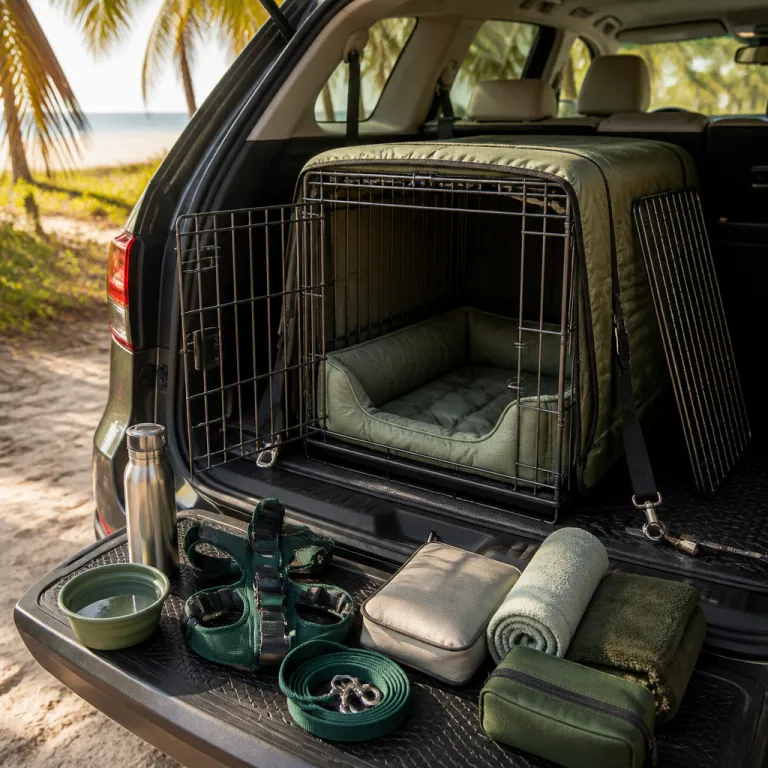
Designing a Florida road trip crate strategy for your pet
Planning a Florida road trip crate strategy starts long before you turn the key. A secure travel crate transforms a simple drive into a controlled environment where your dog or cat can rest while you focus fully on the road ahead. Think of the crate as your pet’s mobile suite, tailored to the heat, traffic, and long distances that define every Florida highway adventure.
Surveys from major pet industry groups indicate that well over half of owners now travel with animals by car, yet many still let them roam free in the cabin. That habit turns a joyful Florida road trip into a serious risk, because even a 30 mph stop can throw an unrestrained pet forward with force comparable to several times its body weight. Road safety agencies and veterinary associations consistently warn that unsecured animals contribute to thousands of injuries each year; a properly secured crate is widely regarded as one of the most effective ways to reduce those numbers. The Center for Pet Safety, for example, publishes crash-test reports that show large differences in performance between certified and non-tested products.
When you plan your Florida road trip crate layout, start with a clear map of your vehicle interior. Decide where the crate will sit, how it will work with seat belts, and how you will access water bowls and leashes during each stop. Imagine your route across Florida, from citrus groves and vegetable stands to coastal rest areas, and ensure your crate position allows quick exits without ever opening a door to a loose animal. A simple checklist helps: confirm that doors open away from traffic, that you can reach the crate without climbing over luggage, and that you have a backup plan if one seating row must fold down unexpectedly.
Choosing a crash tested crate for long Florida drives
The safest way to travel with a dog in a car is simple and non-negotiable: Use a crash-tested pet crate secured in the back seat. A Florida road trip crate should be built from rigid materials, with reinforced doors and latching systems that stay closed under impact. Look for models that publish independent crash-test results, are engineered for stability and ventilation, and are designed to withstand rough road surfaces and sudden stops. The Center for Pet Safety and similar testing programs provide pass/fail data that can guide you toward designs that perform reliably in controlled collisions.
Before a long road trip, measure your pet from nose to base of tail and floor to shoulder, then compare those figures with the internal dimensions of any crate you consider. For example, a 24-inch-long, 18-inch-tall dog generally fits best in a crate with an interior length of about 30 inches and a height of 21 to 23 inches. A crate that is too small will cause pressure points and anxiety, while an oversized model can allow dangerous momentum if you brake hard on a busy Florida road. For air travel you will need different specifications, so use dedicated guidance on a dog travel crate for plane journeys and reserve your sturdier, heavier crate for the Florida road trip by car.
To make sizing easier, use a quick reference table based on your measurements:
- Pet length up to 18 in / height up to 14 in: interior crate length 24–26 in, height 18–20 in
- Pet length 19–24 in / height 15–18 in: interior crate length 30–32 in, height 21–23 in
- Pet length 25–30 in / height 19–22 in: interior crate length 36–38 in, height 24–26 in
Look for features that suit the Florida climate, such as cross-ventilation panels that keep air moving even when you pause at a roadside citrus stand. A mid-height crate can slide neatly behind the front seats, leaving space for luggage and a small cooler of oranges or other snacks. As a real-world example, many travelers choose an aluminum, crash-tested kennel with welded corners, dual latches, and side vents because it balances strength with airflow. Always check the manufacturer’s site for crash-test data, warranty policy, and cleaning instructions, because a crate that is easy to maintain will work better for repeated trips across the state.
Positioning and securing the crate inside your vehicle
Once you have chosen the right Florida road trip crate, the next step is secure installation. The crate should sit on a flat section of the vehicle floor, ideally on the rear bench or in the cargo area directly behind the back seat. Avoid placing any crate on the front passenger seat, because airbag deployment can turn even a strong crate into a hazard on a crowded road. National crash data show that front-seat occupants experience higher impact forces in many collisions, which is another reason to keep animals in the rear zone.
Use the vehicle’s seat belts or dedicated cargo tie-down points to anchor the crate at multiple points. A well-designed Florida road crate will include molded handles or integrated tie-down channels that allow you to thread straps through without crushing the frame. If your car lacks anchor points in the right place, a professional pet transportation service can advise on safe retrofits that comply with Florida’s requirement to prevent driver distraction. Many owners also add a non-slip mat under the crate to reduce vibration and keep the base from shifting on sharp turns.
Before leaving home, perform a short test road trip around your neighbourhood with your pet inside the crate. Listen for rattles, watch for any sliding on turns, and adjust the straps until the crate feels like part of the car rather than loose luggage. For multi-pet families, position crates so that doors open toward the pavement side, never toward active traffic, and keep a clear path to each door in case you need to exit quickly at a busy service area. Practise a timed “load and unload” drill in your driveway so every family member knows how to open, leash, and move each animal safely.
Managing heat, hydration, and comfort in the Florida climate
Florida’s climate adds a demanding layer to any Florida road trip crate plan, because heat builds quickly inside vehicles. Even with windows cracked, interior temperatures can rise far beyond the outside air, especially in mid-afternoon when the sun sits high over the highway. Studies on parked cars show that cabin temperatures can climb more than 20°F in just 10 minutes, which is dangerous for animals that cannot sweat efficiently. That is why no responsible pet owner should ever leave an animal unattended in a parked car, even for what feels like a short stop at a roadside citrus market.
Choose a crate with generous ventilation panels on at least three sides, and avoid covering them with luggage or blankets during the trip. A light-coloured crate reflects more heat than a dark shell, which can make a noticeable difference when you pause near open groves or vegetable stands without shade. Keep a dedicated travel kit with a collapsible water bowl, a thermally insulated bottle, and a small towel you can dampen to cool your pet’s paws and chest during rest breaks. In very hot weather, some owners also pack a cooling mat rated for pets, checking that it fits flat inside the crate without bunching.
Plan your road trip schedule around the cooler parts of the day, driving longer stretches in the morning and early evening. During the hottest season, aim for rest stops every two to three hours so your pet can stretch, hydrate, and relieve itself on a safe patch of grass away from the main road. For mental comfort, pack familiar bedding and a favourite toy, and consult guidance on essential toys and entertainment for a stress-free journey to keep anxiety low inside the crate. Watch for early signs of heat stress—excessive panting, drooling, or lethargy—and be prepared to move your pet into shade and offer cool (not icy) water immediately.
Training your pet to love the crate before the Florida roadtrip
A Florida road trip crate only works well when your pet feels secure inside it. Crate training should begin at home, in a calm room where the crate door stays open and your dog or cat can explore at its own pace. Start by feeding meals just inside the doorway, then gradually move the bowl deeper until your pet walks in willingly and settles on its own. Many trainers recommend keeping early sessions under 10 minutes so the animal finishes while still relaxed.
Short practice sessions help your animal associate the crate with positive experiences rather than confinement. Place a soft blanket that smells like home, add a safe chew or a citrus-scented toy if your pet enjoys that aroma, and sit nearby while your pet rests with the door closed for a few minutes. Over several days, extend the duration and introduce gentle car movements, such as a slow drive around the block on a quiet Florida road. Track your progress in a simple log so you can see how long your pet remains calm and which triggers—such as engine noise or turns—need extra practice.
For pets that show anxiety, work with a veterinarian or qualified trainer who understands travel behaviour. They can map out a step-by-step plan that respects your pet’s limits and avoids flooding it with stress during the first real road trip. In some cases they may suggest pheromone sprays, calming garments, or prescription medication, but these tools should always be paired with gradual training. When your animal finally rides calmly in the crate, you will feel the difference in your own focus and confidence behind the wheel, especially on long stretches between towns and service areas.
Essential gear, services, and digital tools for crate based travel
A thoughtful Florida road trip crate setup extends beyond the crate itself to a suite of supporting gear. Portable carriers from reputable retailers can complement a heavier crate, giving you flexibility for short walks through rest areas or pet-friendly lodging. Combine these with a sturdy harness, a non-retractable leash, and identification tags that clearly show your mobile number and home city in Florida. A backup tag with a temporary vacation address or hotel name can be useful during longer journeys.
Before departure, create a digital folder on your phone that stores vaccination records, microchip numbers, and your veterinarian’s contact details. Add a simple map of your route with marked emergency clinics, pet-friendly hotels, and any professional transport hubs in case you need support mid-journey. Keep a printed copy of this map in the glove compartment, because mobile coverage can fail on rural road segments lined with groves and vegetable farms. Many owners also print a one-page pet profile summarising age, medications, allergies, and behaviour notes to hand quickly to veterinary staff if needed.
When shopping online, review each retailer’s privacy policy and terms of service to understand how your data will be used. A transparent privacy policy on a crate manufacturer’s site signals a broader culture of responsibility, which often extends to product testing and customer support. For more detailed guidance on selecting carriers that complement your main crate, consult this resource on the best pet travel carrier for safe journeys and align your purchases with your long-term travel plans. Keeping receipts and product manuals together—either in a travel binder or a cloud folder—will simplify warranty claims and future upgrades.
Legal, ethical, and practical policies for safe pet road travel
Traveling with animals on any Florida road involves both legal obligations and ethical choices. Florida expects pets to be secured during vehicle travel to prevent distractions, and a well-anchored Florida road trip crate is the most reliable way to comply. State law allows officers to cite drivers whose animals interfere with control of the vehicle, and some counties add rules about transporting dogs in open truck beds. By treating restraint as a non-negotiable safety measure, you protect your pet, your passengers, and every other driver sharing the road with you.
Think of your own household rules as a personal travel policy that sits alongside state regulations. This policy might state that no pet rides on a driver’s lap, that children never open crate doors without adult supervision, and that every long road trip includes scheduled breaks for exercise and hydration. You might also specify that the crate door stays latched whenever the vehicle is in motion and that only designated adults handle leashes at fuel stations. When everyone in the car understands and respects this framework, your Florida road trip becomes smoother, calmer, and far less vulnerable to last-minute improvisation.
Ethical travel also means planning for what happens if your pet becomes ill or lost during the season when roads are busiest. Imagine pulling into a crowded service area and realising your dog has slipped a collar; a microchip, clear identification, and recent photos stored on your phone will work together to speed reunions. Share your route and emergency contacts with a trusted friend at home, and keep printed copies of key documents in case your phone battery fails at a remote site far from urban services. Many animal welfare organisations recommend rehearsing a “lost pet plan” in advance so every family member knows who calls local shelters, who searches the area, and who stays with the vehicle.
Key statistics on pet travel safety and crate use
- Industry surveys suggest that a substantial majority of pet owners travel with their animals by car, which makes crate safety a mainstream rather than niche concern. Some reports estimate that more than 70% of dog owners take at least one car trip with their pet each year.
- Road safety organisations and animal welfare groups report thousands of annual incidents linked to unrestrained pets, highlighting how a single Florida road trip crate can significantly reduce injury risk. In collision reconstructions, even a 10 kg dog can exert several hundred pounds of force when thrown forward.
- Crash-tested crates have grown in market share over recent seasons, reflecting increased awareness of the dangers of letting pets move freely inside vehicles. Data from testing bodies such as the Center for Pet Safety show that not all products marketed as “safety crates” pass rigorous crash protocols.
- Regular breaks every two to three hours on a long road trip help maintain hydration and reduce stress, especially in hot regions such as Florida where heat buildup is rapid. Veterinary guidelines emphasise that frequent stops also lower the risk of motion sickness and allow you to check for early signs of overheating.
Frequently asked questions about Florida road trip crates
What is the safest way to travel with a dog in a car?
The safest method is to place your dog in a crash-tested crate secured on the rear seat or in the cargo area behind the back seat. This setup prevents the animal from becoming a projectile during sudden stops or collisions. It also reduces driver distraction, which is a key factor in many road incidents involving pets. Whenever possible, choose a model that has published crash-test results from an independent organisation.
Are there specific pet travel regulations in Florida?
Florida expects drivers to prevent animals from interfering with vehicle control, which effectively means pets must be restrained. A properly anchored crate, harness, or barrier system satisfies this requirement and aligns with best practice for road safety. Local municipalities may add rules, so check city or county guidance before a long road trip. Some coastal areas, for example, have additional ordinances about dogs riding in open pickup beds or being left unattended in hot vehicles.
How often should I stop during a road trip with my pet?
Plan to stop every two to three hours so your pet can stretch, drink water, and relieve itself in a safe area away from traffic. These breaks are especially important in the Florida climate, where heat and humidity can dehydrate animals quickly. Use each pause to check the crate’s straps, ventilation, and bedding condition. If your pet is young, elderly, or has medical issues, consider even more frequent, shorter breaks based on your veterinarian’s advice.
What size crate should I choose for my dog or cat?
Select a crate that allows your pet to stand, turn around, and lie down comfortably without excess empty space. Measure your animal’s length and height, then compare those figures with the internal dimensions listed on the manufacturer’s site. A snug but not tight fit offers the best balance of comfort and safety on a moving road vehicle. When in doubt between two sizes, many experts suggest choosing the smaller option that still meets these movement criteria to limit sliding during sudden stops.
Should I use a soft carrier or a hard crate for a Florida roadtrip?
For long drives on busy roads, a hard, crash-tested crate offers superior impact protection compared with most soft carriers. Soft carriers are useful for short transfers through hotels or rest areas but should not replace a rigid crate for highway speeds. Many experienced travelers use both, reserving the hard crate for driving and the lighter carrier for brief off-road movements. Whatever you choose, ensure that zippers, clips, and doors cannot be pushed open by a determined pet during the journey.