Why pet-friendly hotels family travel is booming while families lose ground
Pet-friendly hotels family travel is no longer a niche; it is a deliberate revenue strategy. Across major destinations, hotels and resort brands have realised that a dog in a room can generate higher yield than a toddler in the same space, because the pet fee and nightly surcharge stack quietly on top of the base rate while the wear on carpets, walls and furniture often remains lower than with children. For premium families trying to plan one coherent stay where both kids and pets are welcome, the new reality is that many properties embrace animals enthusiastically while tightening the screws on extra beds, interconnecting rooms and flexible cancellation for parents.
Industry analysts tracking the pet travel segment point to a simple economic equation: pet owners are willing to pay more for certainty that their dog is welcome, and they complain less loudly when the room is smaller than expected or the view is compromised. In a 2023 Fortune feature on pet travel trends, drawing on American Pet Products Association (APPA) survey data, reporters cited research showing that roughly two thirds of U.S. households now own at least one pet and that a majority of those owners plan to travel with them, a pattern hotel groups interpret as a durable demand shift rather than a passing fad. Primary sources such as the APPA’s 2021–2022 National Pet Owners Survey, Fortune’s 2022 and 2023 pet travel roundups, Hepper’s 2022 hotel pet policy review and Coherent Market Insights’ 2023 Pet Travel Services Market report all converge on the same conclusion: the sector wants to increase revenue from pet-friendly services, reduce operational challenges associated with children and align with demographic trends favouring pet ownership, and that clarity explains why around three quarters of luxury, mid scale and economy hotels now allow some form of pets-on-property policy while family inventory shrinks. When you read that dogs will stay free at a friendly hotel but your third child triggers a surcharge, you are not imagining the bias; it is a pricing decision dressed as a hospitality philosophy.
The data behind this pivot is striking yet rational. Fortune’s 2022 compilation of pet ownership statistics, based on APPA surveys of several thousand U.S. households, reports that around two thirds of homes now have at least one pet, and a majority of these pet owners say they are likely to travel with that pet rather than leave it at home, which means the addressable market for dog-friendly stays is expanding faster than the market for traditional family suites. When Coherent Market Insights projects in its 2023–2030 outlook that dogs will dominate just over half of the global pet travel segment by revenue, hotel chains read that as a green light to design properties where a Labrador of any size feels more welcome than a family of five, and they calibrate weight restrictions, pet fee structures and allowed hotel categories accordingly. For parents who also travel with dogs, the trade off becomes painfully clear: the pet-friendly label opens doors for the animal while closing them, subtly, for the children.
The economics of a dog in the room versus a child on the sofa bed
Follow the money and the logic behind pet-friendly policies becomes uncomfortably transparent. A standard hotel room that welcomes one or two dogs can command a nightly fee uplift through a fixed pet fee, sometimes per stay and sometimes per night, while the incremental cost to the hotel is limited to a deeper clean, a couple of water bowls and a handful of waste bags. The same room occupied by two adults and two children often generates no extra revenue beyond perhaps a modest extra bed fee, yet the perceived risk of noise complaints, housekeeping strain and front desk escalations is significantly higher.
Revenue managers inside large hotel chains will not say it on the website, but they know that a dog rarely complains about Wi‑Fi speed, breakfast queues or pool hours, whereas a family of four is more likely to test every service promise and ask for compensation when it fails. That is why you now see friendly hotels advertising generous policies where pets stay free up to a certain weight limit, while the small print quietly caps occupancy at two or three humans per room and discourages rollaway beds for kids. The industry’s own Q&A style messaging, echoed in 2022–2023 trade press interviews with brand executives and in coverage from outlets such as Skift and Fortune, is blunt about the rationale, stating that the travel industry is focusing on pet-friendly services to capitalise on the growing pet ownership trend and increase profitability, and that families face fewer accommodations and higher costs for child-friendly travel.
Look closely at how properties structure what they call pet-friendly and dog-friendly offers. Many hotels allow one dog up to a specific size or weight, with a clear statement that other pets allowed will incur a higher fee or be restricted to certain floors, while there is no such nuance for children, who are often simply not allowed in adults-only wings or entire resorts. In mountain destinations such as Banff, where regulations and wildlife protection add another layer of complexity, the most thoughtful operators balance these pressures, and guides to pet welcoming national park stays show how a dog can be integrated into a fragile ecosystem with more care than many hotels show to families. The economic argument may be compelling on a spreadsheet, but it risks eroding the long term loyalty of premium families who travel with both kids and pets.
Adults-only, dogs welcome: where the line is quietly redrawn
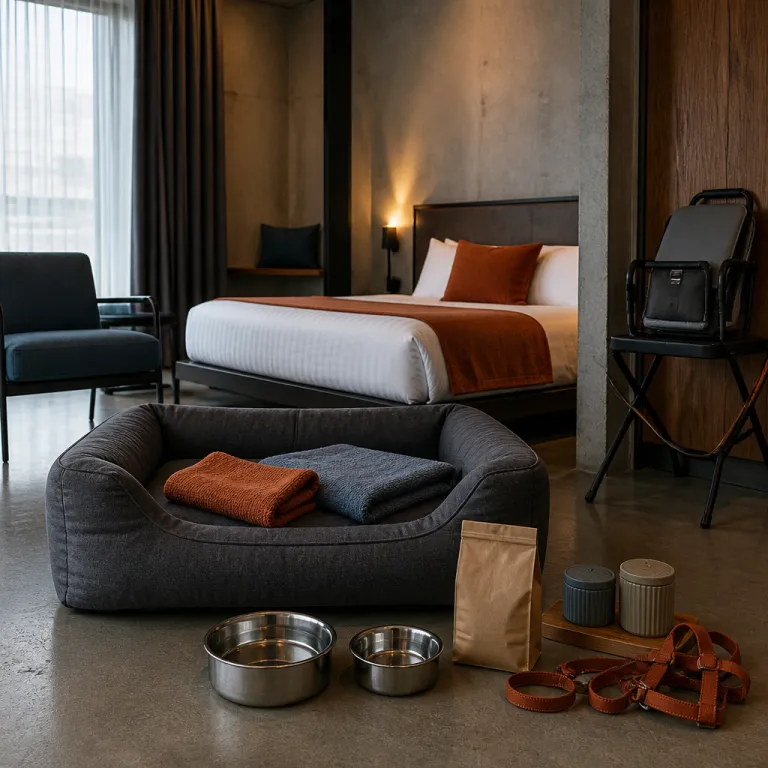
Walk through the lobby of a new coastal inn that markets itself as serene and adult focused, and you may notice an elegant dog bed by the fireplace and stainless steel bowls discreetly tucked beside the bar. These properties are not shy about stating that children under a certain age are not allowed, yet they celebrate being dog friendly with welcome treats, water bowls at the entrance and curated walking maps, signalling clearly which guests they consider the best fit for their atmosphere. The line is no longer between pet-friendly and non pet-friendly hotels; it is between adults with dogs and adults with children.
Some of the most striking examples sit in the luxury segment, where hotels resorts position themselves as sanctuaries of calm while partnering with pet product companies to offer elevated amenities such as in room dog menus, spa inspired grooming and even wellness experiences that mirror human treatments. At the same time, these properties may impose strict weight restrictions on dogs, allowing only small pets allowed in certain suites, while declining to accept families altogether, effectively turning the allowed hotel category into a club for couples and solo travellers with compact dogs. The rise of pet wellness menus, chronicled in features on where the pet wellness menu earns its keep, shows how far operators will go to court this demographic, even as they quietly reduce playrooms, kids’ clubs and family pools.
There is an honest counter argument that this strategy is short sighted. Today’s premium family, juggling school holidays, a beloved dog and the search for a genuinely friendly hotel, is tomorrow’s empty nest couple whose travel pet priorities will shape their loyalty for decades, and they will remember which properties welcomed their children as warmly as their dogs. When adults only policies collide with generous dog-friendly rules, the message to families with children is unmistakable: your kids are the disruptive element, not your pet, and the industry is choosing the guest who pays a predictable pet fee over the guest who might ask for a cot. For a sector that trades on emotional connection, that is a risky bet.
How to read between the lines: spotting kid-quiet signals on pet-forward sites
For families planning pet-inclusive hotel stays, the most powerful tool is a cold, forensic reading of the hotel website. Start with the pet policy page and the family section, if it exists, and compare the specificity: if the dog-friendly rules detail the exact size, weight limit, number of dogs allowed per room, pet fee per night and where water bowls and waste bags are located, while the family information is limited to a vague statement that children are welcome, you are looking at a property that has thought more deeply about pets than about kids. The imbalance is even clearer when hotels offer named packages for pets, including welcome gifts and late checkout, but provide no equivalent for families beyond a generic breakfast inclusion.
Next, scan the room descriptions and occupancy rules. A property that highlights how many pets allowed in each category, whether properties allow dogs to stay free in certain suites and which locations have direct garden access for a quick morning walk is signalling that the dog is a primary guest, while a lack of clarity on extra beds, sofa beds and connecting doors suggests that families are an afterthought. When you see a friendly hotel such as a renovated Red Roof inn proudly stating that pets stay free nationwide while remaining silent on whether three children can share with two adults, you have your answer about who the policy is designed for.
Finally, look beyond the policy page to the stories the brand tells. Operators such as Rosewood Kona Village and Kimpton have built reputations on balancing genuine pet-friendly hospitality with thoughtful family programming, proving that it is possible to welcome dogs and children without turning either into a nuisance surcharge, and their communications reflect that balance through imagery, language and amenity design. By contrast, some properties showcase only couples with dogs on terraces, no children in sight, while emphasising adults only pools and quiet hours, and for a premium family this is the clearest signal to look elsewhere or to pivot towards destinations where the trail network, such as the circuits mapped in the South Lake Tahoe trail to patio circuit, offers as much joy to kids as to dogs. The right balance, for families who travel with pets, lies in properties that treat the dog as part of the family unit rather than as a more profitable replacement for it.
Key figures behind the pet-first pivot in hospitality
- Approximately 66 percent of households in the United States now own at least one pet, according to Fortune’s 2022 reporting on American Pet Products Association National Pet Owners Survey data, which gives hotels a larger base of potential pet-focused guests than traditional family-only marketing ever offered.
- Google searches related to pet travel in the United States reached around 19 million in a recent 12 month period, again reported by Fortune in its 2023 pet travel behaviour overview, signalling that demand for information on pet-friendly stays is not a passing trend but a sustained shift in planning behaviour.
- More than six in ten self described pet parents say they are likely to travel with their pets, based on consumer polling cited by Fortune from samples of several thousand respondents, which helps explain why roughly three quarters of luxury, mid scale and economy hotels now allow some form of pets on property.
- Industry commentary from Hepper’s 2022 hotel pet policy analysis indicates that around 75 percent of hotels across price segments now accept pets in some capacity, while Coherent Market Insights’ 2023 Pet Travel Services Market study projects that dogs will account for just over half of the pet travel market share by the end of the decade, reinforcing the focus on dog specific amenities and policies.
- Analysts summarising the shift, including contributors to Skift’s 2023 coverage of pet-centric hospitality and Fortune’s travel trend roundups, note that the travel industry is focusing on pet-friendly services to capitalise on the growing pet ownership trend and increase profitability, and that families face fewer accommodations and higher costs for child-friendly travel, a dynamic that premium families feel acutely when planning multi generational trips.
Further reading for data driven travellers includes coverage from Skift on the strategic shift towards pet centric hospitality, market analysis from Coherent Market Insights on the growth of pet travel and consumer surveys compiled by Fortune on pet ownership and travel intentions.